What goes in a CSDDD due diligence questionnaire

What goes in a CSDDD due diligence questionnaire
A due diligence questionnaire (DDQ), or supplier self-assessment questionnaire (SAQ), is how a company gathers human-rights, environmental, ethics and governance information from its suppliers. Under the EU Corporate Sustainability Due Diligence Directive (CSDDD), it's the practical engine of step two - identifying and assessing impacts. Here's what a good one contains, whichever side of the request you're on.
The eight sections to expect
A well-built CSDDD questionnaire works through, roughly, eight areas:
- Company & ownership - who the entity is, where it operates, headcount, ultimate parent.
- Governance & policies - a human rights / due-diligence policy, a code of conduct, and a named person responsible.
- Human rights & labour - forced and child labour, freedom of association, working hours, fair and living wages, no recruitment fees.
- Health & safety - a safety management system, protective equipment, accident reporting.
- Environment & climate - permits, pollution and waste control, energy and emissions.
- Business ethics & anti-corruption - anti-bribery controls, sanctions compliance, data protection, a whistle-blowing channel.
- Supply-chain transparency - how far the supplier can see into its own sub-tier suppliers.
- Grievance & remediation - a complaints mechanism and a way to put things right.
Our free CSDDD due diligence questionnaire template lays all eight out as ready-to-send questions, with a simple Yes / Partial / No / N-A response scale and space for evidence.
Keep it proportionate: the value-chain cap
The most common mistake under the new rules is over-asking. Omnibus I added a value-chain cap: an in-scope company generally may not demand information beyond a standardised set from a business partner with fewer than 5,000 employees, unless it genuinely can't be obtained otherwise.
So a good questionnaire is risk-based, not exhaustive. Focus on your direct (tier-1) partners first, ask what's relevant to the actual risk, and only go deeper when you have plausible information of a real impact.
If you're the buyer
- Send it to your highest-risk direct suppliers first; prioritise by country and sector risk.
- Use the answers to score and prioritise, not to "pass or fail" a supplier.
- Turn gaps into a corrective-action plan with owners and dates - not an instant exit. The directive favours engaging and, where needed, suspending a relationship over simply cutting it.
- Back the questionnaire with a supplier code of conduct and the right to verify.
If you're the supplier
- Answer honestly - a "Partial" with an improvement note beats an empty "Yes".
- Attach evidence: policies, certificates, contract clauses, audit reports.
- You can push back on excessive asks under the value-chain cap.
- Keep your completed copy. The next customer request then takes hours, not weeks. A short human rights policy signals maturity fast.
The bottom line
A CSDDD questionnaire isn't box-ticking - it's how large companies turn the directive's due diligence duty into something their suppliers can actually act on. Done well, it's proportionate, evidence-based, and the same template serves both buyer and supplier.
Download the free CSDDD due diligence questionnaire, or subscribe to The CSDDD Brief for updates as the guidance evolves.
Sources: Directive (EU) 2024/1760 as amended by Directive (EU) 2026/470; OECD Due Diligence Guidance for Responsible Business Conduct. Guidance, not legal advice.
Related reading
The CBAM Verifier Bottleneck: Why Booking a Slot in Late 2026 Is the Real Compliance Decision
Verifier availability - not data quality - is the binding constraint on using actual embedded emissions for 2026 CBAM imports. Here's the arithmetic, the third-country gap, and what to do in Q4 2026.
The CSDDD Guidelines Are Where Compliance Is Actually Decided - Here's What to Build Before Q1 2027
The Commission's CSDDD implementation guidelines land in Q1 2027 - a year before transposition. They set the evidentiary standard, not the directive. Here's what is unresolved and what to build now.
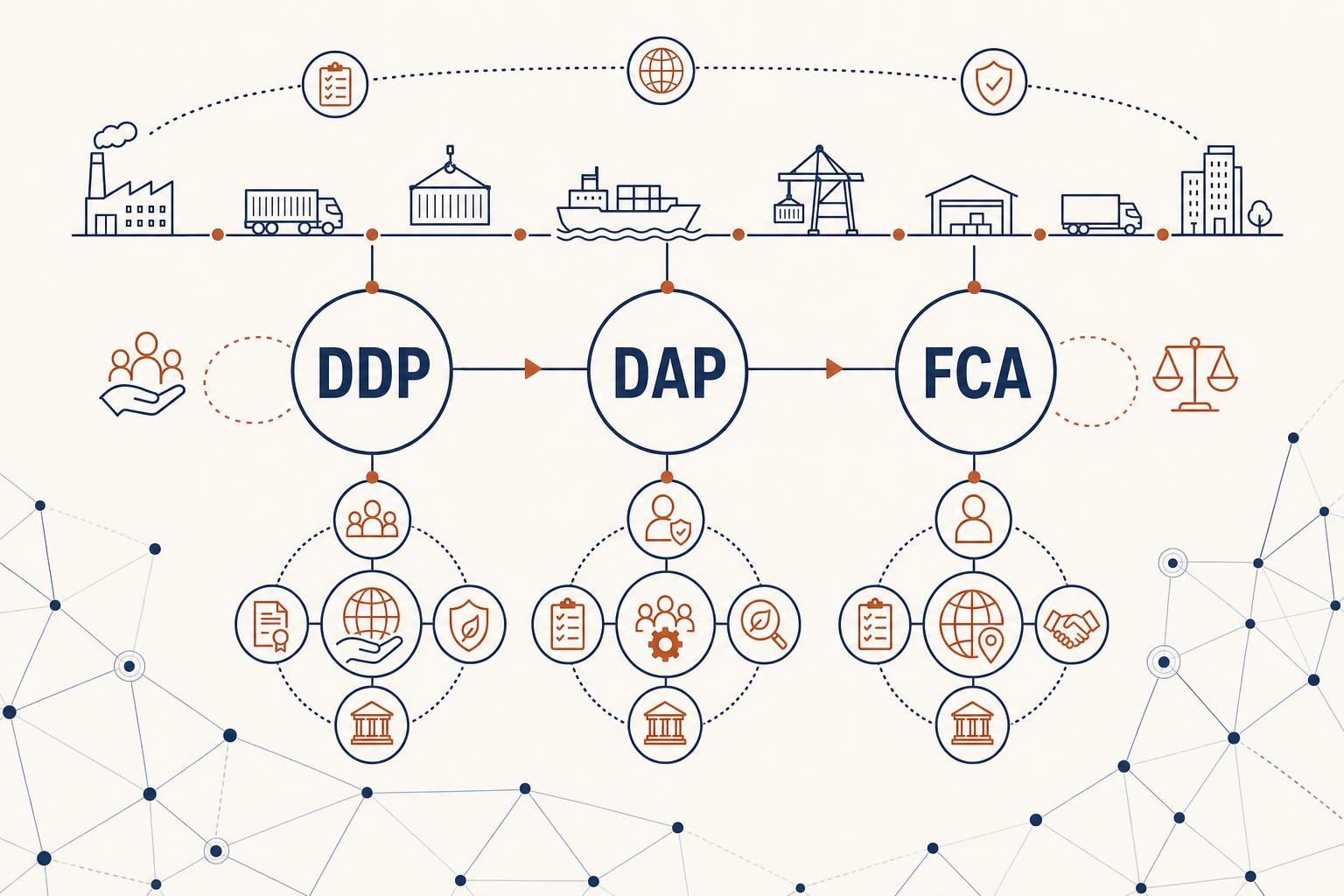
Three Letters, One Liability: How Your Incoterm Decides Who Pays CBAM
DDP, DAP, FCA - three letters in a contract determine who carries CBAM liability. A practical guide for procurement, trade compliance and legal teams on both sides of an EU import deal.