The CBAM Verifier Bottleneck: Why Booking a Slot in Late 2026 Is the Real Compliance Decision
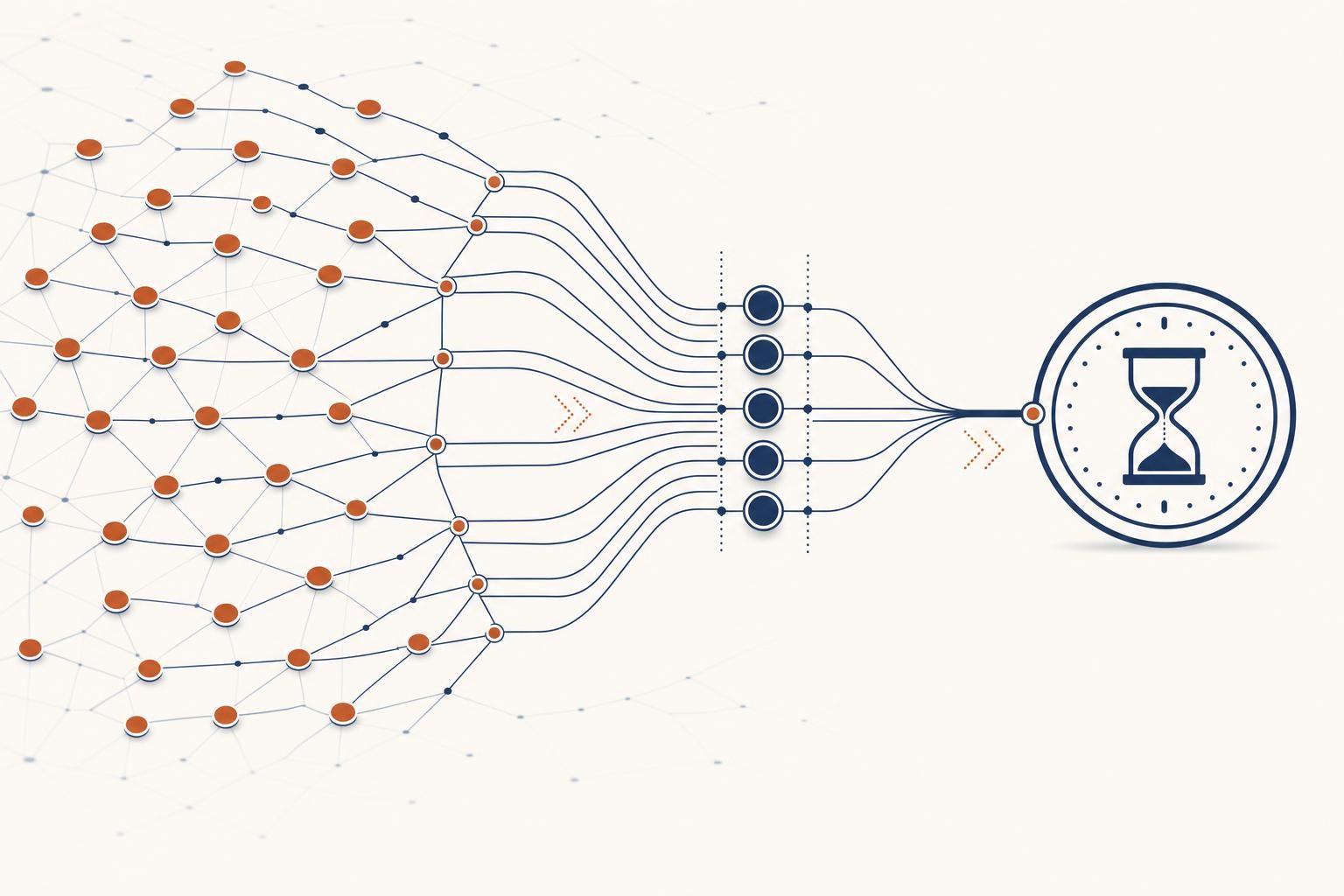
The conversation about CBAM verification has focused almost entirely on the wrong question. Importers ask: "Is our supplier's data good enough to verify?" The more urgent question is: "Can we even get a verifier booked before the window closes?"
This post is about capacity and scheduling, not methodology. The arithmetic is uncomfortable: a verifier population that is only now forming, thousands of non-EU installations that need physical site visits, and a single hard deadline - 30 September 2027, when the first annual CBAM declaration covering all 2026 imports is due. The booking decision has to be made in late 2026. Here is why.
The arithmetic of a constrained market
Start with the deadline stack. CBAM certificate sales open on 1 February 2027, giving importers their first opportunity to purchase the certificates they will need to surrender. The declaration itself - covering every tonne of CBAM-covered goods imported throughout calendar year 2026 - must be filed by 30 September 2027.
For importers who want to use actual verified emissions rather than default values, the verification report must be in the CBAM Registry before that declaration is filed. The Commission expects accredited verifiers to issue the first verification reports through the Registry from January 2027. That means the site visit, the evidence review, and the report issuance all have to happen between now and roughly mid-August 2027 - the point at which the guidance suggests verified reports should reach declarants to allow time to assemble the declaration.
Now set that against supply. The European Commission confirmed that the first CBAM verifiers were expected to receive accreditation around September 2026 - meaning the accredited verifier population was, as of the time of writing, still in the process of forming. The Commission's own guidance estimates that accrediting a new verifier normally takes six to twelve months. Even verifiers with existing EU ETS accreditation under ISO 14065 must go through a separate CBAM-specific accreditation process.
The result: a small, newly formed pool of accredited verifiers, a large and geographically dispersed population of non-EU installations, mandatory physical site visits for every first-year verification, and roughly twelve months of usable scheduling window. That is a capacity constraint, not a data quality problem.
What actually happened in August and September 2026
Two things happened in quick succession that define the current moment.
On 24 August 2026, the European Commission published 141 pages of guidance on CBAM verification and accreditation for verifiers and National Accreditation Bodies, focused specifically on verifying emissions reports of non-EU installations producing CBAM goods imported from 1 January 2026. The document explains the roles and responsibilities of CBAM verifiers and National Accreditation Bodies, and provides guidance on accreditation principles and the practical application of CBAM requirements. It creates no new legal obligation and does not change the emissions methodology, default values, or reporting deadline - but it is the first comprehensive operational document verifiers and NABs have had to work from.
From 1 September 2026, accredited verifiers can register in the CBAM Registry, following a two-stage process: technical-user access via EU Login, then an application to the National Competent Authority of the verifier's accreditation country. Verifiers must register within two months of receiving accreditation.
The significance of this timing is easy to understate. The guidance that verifiers need to plan their work arrived on 24 August. Registry access opened on 1 September. The first verification reports are expected to flow through the Registry from January 2027. That is a four-month runway from operational clarity to first report - for a process that the Commission itself says normally takes six to twelve months to accredit a new verifier, let alone complete a full verification cycle.
The August 2026 guidance is not legally binding and does not represent an official position of the Commission. Only the European Court of Justice can provide a binding interpretation of the CBAM Regulation. Use the guidance as an operational reference, not a compliance guarantee.
The third-country accreditation gap
The capacity constraint is sharpest for importers sourcing from Asia, Turkey, India, and Latin America - which is most of the market for steel, aluminium, and cement.
Here is the structural problem. Only EU (or EEA) National Accreditation Bodies can grant CBAM accreditation. Verifiers established in a third country must apply to an EU NAB that has agreed to accredit third-country applicants. According to the Commission's own state-of-play PDF (as of 24 July 2026), 24 NABs had agreed to provide CBAM accreditation, but only 7 of those 24 had agreed to accredit verification bodies established outside the EU. According to cbamguide.com (a secondary source - check directly for the current position, as this is one of the fastest-moving parts of the tracker), COFRAC in France is confirmed as one of those seven.
The practical consequence is described clearly: until a third-country verifier is accredited through this route, non-EU installations depend on EU-based verifiers travelling for the mandatory physical site visit. For 2026, that physical site visit is not optional. The regulation requires it for every installation in the first verification year. Virtual visits and waivers are available only from 2027 onward, under defined low-risk conditions.
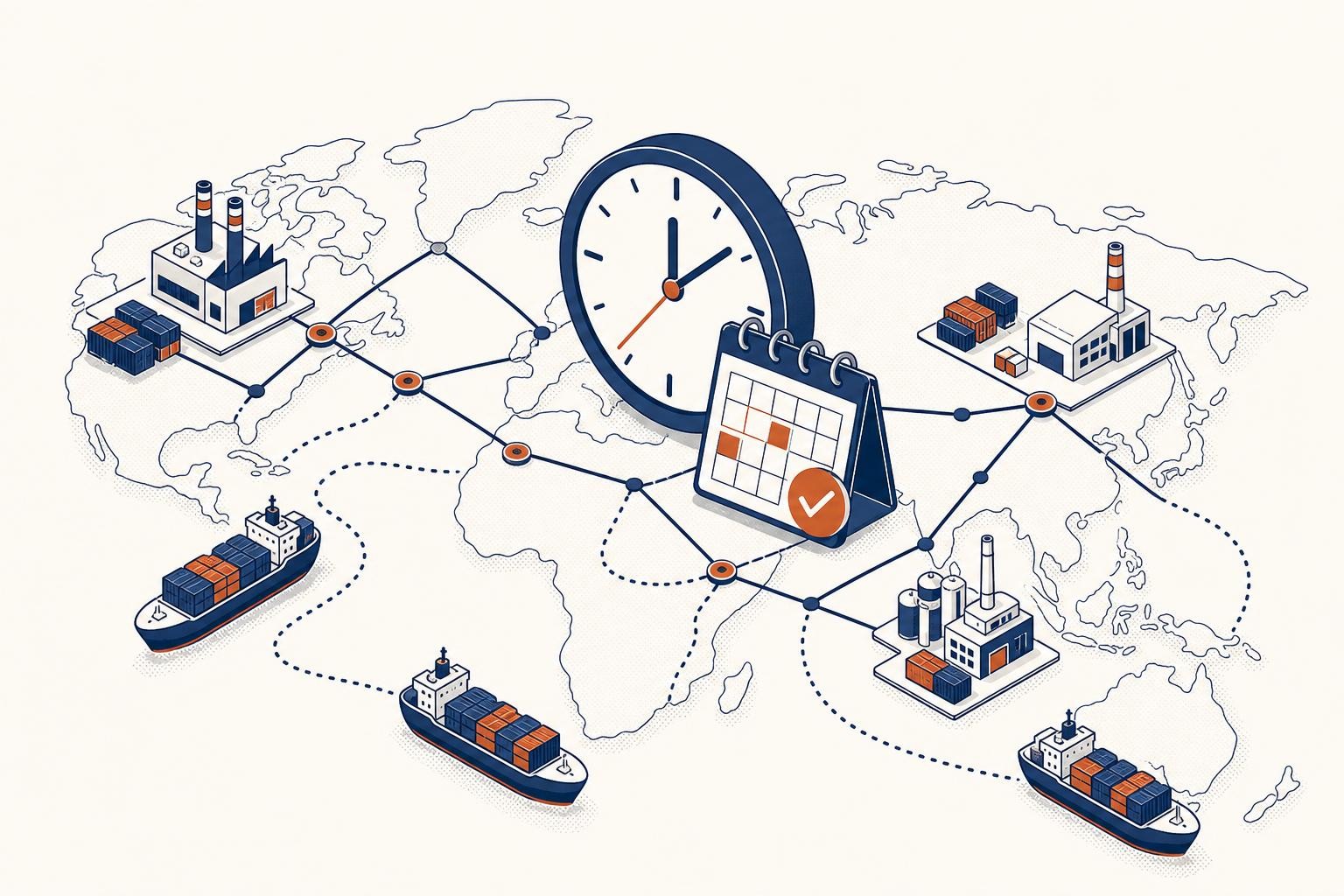
What does that mean in practice for a steel mill in India, a cement plant in Turkey, or an aluminium smelter in China? It means an EU-based verifier has to travel there. That adds visa arrangements, travel scheduling, coordination with the installation's production calendar, and typically several weeks of lead time on top of the verification work itself. For importers sourcing from ten or more installations across multiple countries, the logistics alone make late 2026 contracting essential.
The real decision: actual values vs. default values
This is not a compliance binary. Default values are lawful. The CBAM Regulation explicitly permits importers to use them. The question is purely financial.
Under Implementing Regulation (EU) 2025/2621, importers using default values pay a markup on top of the certificate cost: 10% in 2026, rising to 20% in 2027 and 30% from 2028 onward. Fertilisers are the exception - their markup is fixed at approximately 1%, reflecting agricultural food security concerns. For every other sector - steel, aluminium, cement, hydrogen - the markup escalates deliberately.
The markup is only part of the cost story. Default values are also set conservatively, typically reflecting the average emission intensity of the ten highest-emitting exporters for a given country-product combination. For many efficient producers, the gap between their actual emissions and the assigned default is substantial. A Turkish cement producer with actual emissions of roughly 0.88 tCO₂ per tonne, for example, faces a default value of approximately 1.584 tCO₂e per tonne - an 80% gap before the markup is even applied.
The financial case for verification is therefore strongest where two conditions coincide: high import tonnage, and a large gap between the supplier's actual emissions and the country-sector default. That combination - not verification as a compliance checkbox - is what should drive prioritisation.
Practical sequencing: Q4 2026 through Q2 2027
The Commission recommends starting verification during the reporting year rather than waiting until production data are closed. For 2026 imports, that means now. Here is a workable sequence:
Map every supplier installation that will be included in your 2026 declaration. Rank them by import tonnage × emissions intensity gap (actual vs. default). For the top-priority installations, identify accredited verifiers with the correct CBAM activity group scope for your sector — a verifier accredited for cement cannot verify a steel installation. Contract before year-end. Waiting until 2027 risks being unable to secure a slot before peak verification demand in mid-2027.
Ask each priority supplier to confirm their monitoring plan is in place and that production data for 2026 is being captured in a format the verifier can audit. The Commission recommends verifiers begin evidence review during the reporting year — not after it closes. Suppliers with precursor inputs (e.g. iron ore for steel, clinker for cement) also need to confirm upstream verification timetables.
For non-EU installations, physical site visits must be scheduled and completed. For installations in Asia, Turkey, India, or Latin America, build in several weeks of lead time for travel logistics, visa arrangements, and coordination with the installation's production calendar. The Commission expects the first verification reports to be issued through the Registry from January 2027 — early movers will have more scheduling flexibility.
The guidance suggests verified reports should reach declarants by mid-August 2027 to allow time to assemble the declaration and purchase certificates. For installations with complex production routes or precursor chains, allow additional time. Verifiers upload reports directly to the CBAM Registry; confirm the upload has occurred and that the report is linked to your declarant account.
Submit the annual CBAM declaration covering all 2026 imports. For installations where you have verified actual data, use those figures. For installations where verification was not completed in time, you will fall back on default values — lawful, but carrying the 10% markup for 2026. Surrender the corresponding certificates.
Which suppliers to prioritise. The triage logic is straightforward. Prioritise verification for installations where: (a) import volume is high enough that the markup cost exceeds the verification cost, and (b) the supplier's actual emissions are likely to be materially lower than the country-sector default. High-volume imports of Indian or Turkish steel and Turkish cement are the clearest cases. Low-volume imports of fertilisers - where the markup is only ~1% - are the clearest cases for accepting defaults, at least for 2026.
Honest uncertainty: the picture is moving weekly
Any specific count of accredited verifiers is a point-in-time snapshot. The Commission's state-of-play PDF is updated periodically, and the accreditation numbers are changing as NABs process applications. The situation in early 2027 may look materially different from today.
A few things are genuinely uncertain:
- How many verifiers will be accredited by end-2026, and in which sectors? The Commission has not published a target number. The first accreditations were expected around September 2026, but the pace of subsequent accreditations depends on NAB processing capacity.
- Will third-country verifier accreditation accelerate? As of the July 2026 state-of-play, only 4 of the 24 NABs were already accepting third-country applications. If that number grows quickly, the travel dependency for Asian and Turkish installations eases.
- Will the Commission provide any flexibility on first-year physical site visits? The current regulation requires them. There is no published indication of flexibility, but the regulatory environment has moved before.
The Commission's CBAM verification page will publish the list of accredited verifiers once the first accreditations are granted. That list - currently empty - is the most important document to watch in Q4 2026.
What to watch in Q4 2026: (1) The Commission's CBAM verification page for the first published list of accredited verifiers. (2) The state-of-play PDF for changes to third-country accreditation capacity. (3) Your verifier's CBAM activity group scope — confirm it covers your specific sector before signing a contract.
The cost of a scheduling failure
Missing a verification slot does not produce a penalty. It produces a higher certificate bill. Falling back on default values is lawful - but the 10% markup for 2026 becomes 20% in 2027 and 30% from 2028 onward, and the CBAM factor itself rises from 2.5% in 2026 toward 100% in 2034. The combination of an escalating markup and an escalating factor means the cost of not verifying compounds every year.
For most importers, the decision is not "verify or don't verify." It is "verify in 2026 or pay more every year until you do." The verifier booking decision in late 2026 is therefore a cost management decision, not a compliance checkbox.
Verifier accreditation numbers are moving weekly. We track the Commission's state-of-play PDF and will update this post as the picture changes. Subscribe to The CBAM Brief for plain-English updates when something material shifts.
Related reading
The CSDDD Guidelines Are Where Compliance Is Actually Decided - Here's What to Build Before Q1 2027
The Commission's CSDDD implementation guidelines land in Q1 2027 - a year before transposition. They set the evidentiary standard, not the directive. Here's what is unresolved and what to build now.
Three Letters, One Liability: How Your Incoterm Decides Who Pays CBAM
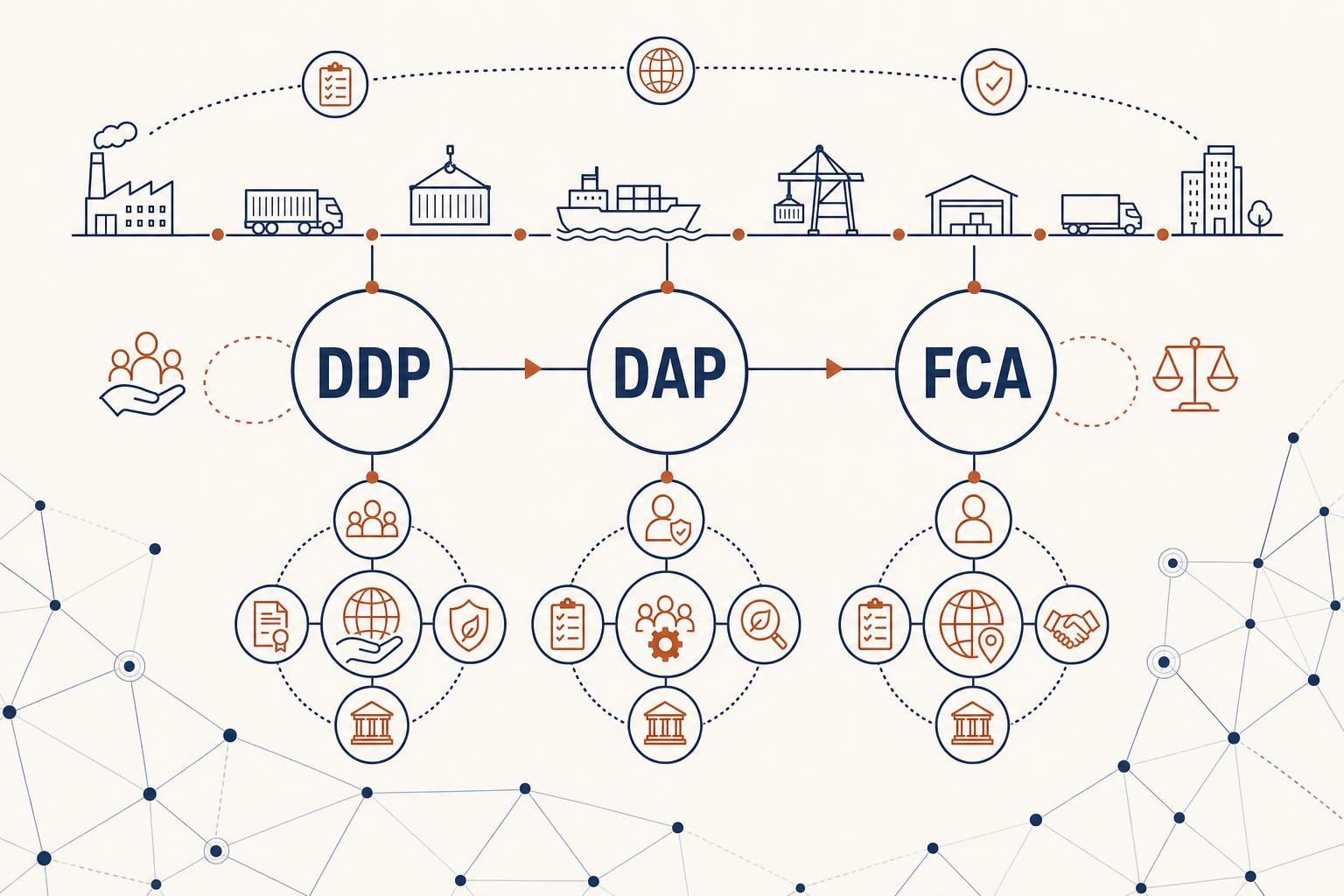
DDP, DAP, FCA - three letters in a contract determine who carries CBAM liability. A practical guide for procurement, trade compliance and legal teams on both sides of an EU import deal.
Asking Suppliers for Data Under CSDDD: What the Omnibus Limits on Information Requests Mean in Practice
After Omnibus I, CSDDD companies can no longer send every supplier the same long questionnaire. Here is what the necessity and proportionality limits mean, and how to redesign your supplier data requests.