The Article 9 Deduction: How to Cut Your CBAM Certificate Bill with Carbon Prices Paid Abroad
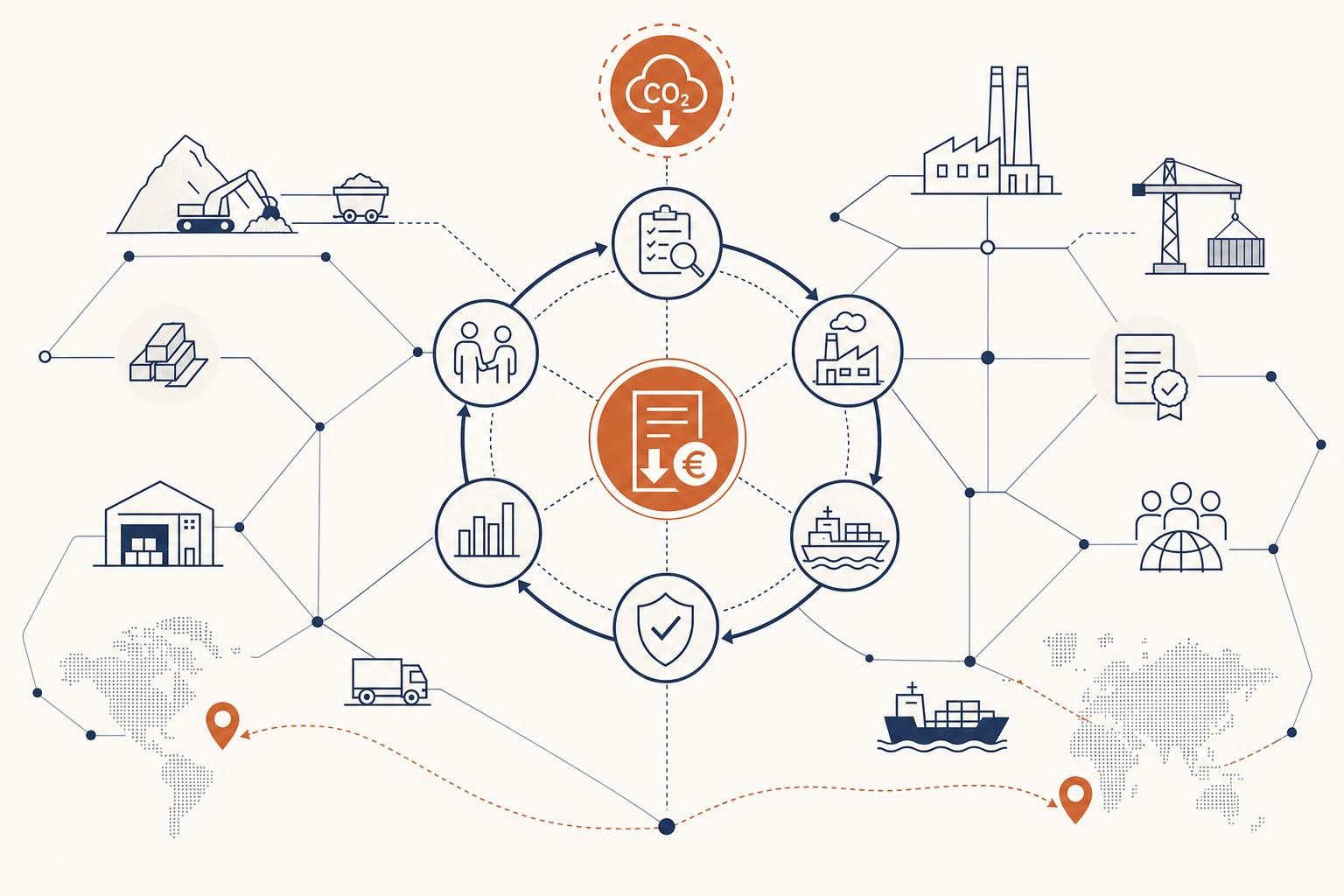
Most authorised CBAM declarants are focused on the right things: getting verified emissions data from suppliers, understanding the CBAM factor ramp, and making sure their registry authorisation is in order. What many are missing is the single most powerful lever for reducing the certificate bill they'll face from February 2027 onwards: the deduction for a carbon price already paid in the country of origin.
Article 9 of Regulation (EU) 2023/956 - as amended by the Omnibus simplification (Regulation (EU) 2025/2083) - is not a technicality. For importers sourcing from countries with a functioning emissions trading system or carbon tax, it can materially reduce the number of certificates to surrender. The rules for claiming it are now taking shape, and the window to build the right supplier processes is open right now.
This guide covers the mechanism in detail: what the law says, what the draft implementing regulation proposes, which schemes qualify and which don't, and what evidence you need to collect.
What Article 9 Actually Says
Article 9 of the CBAM Regulation provides that an authorised CBAM declarant may claim in the CBAM declaration a reduction in the number of CBAM certificates to be surrendered in order to take into account the carbon price paid in the country of origin for the declared embedded emissions, with the qualification that the reduction may only be claimed where the carbon price has been "effectively paid" and net of any rebate or other form of compensation that would have lowered that price.
The word "effectively" is doing a lot of work here. It means the gross price paid under a foreign scheme minus anything that was handed back - free allowances, export rebates, output-based rebates, or any other form of compensation. What constitutes a "carbon price" for these purposes is defined narrowly in Article 3(29), which captures only "the monetary amount paid in a third country, under a carbon emissions reduction scheme, in the form of a tax, levy or fee or in the form of emission allowances under a greenhouse gas emissions trading system, calculated on greenhouse gases covered by" the mechanism.
The practical implication: a carbon price that exists on paper but is largely offset by free allocation or rebated at the point of export may produce a deductible amount close to zero.
The Two-Track System
The amended CBAM Regulation establishes a two-track system for deducting carbon price paid in a third country: (1) actual carbon price paid (net of rebates/compensation, certified by an independent person, with four-year record-keeping), and (2) default carbon prices that will be set by the Commission from 2027 (used when defaults are used for embedded emissions).
Track 1: Actual carbon price paid
This is the track available from 1 January 2026 - and the only track available for the first declaration year. If actual emissions data is used to determine CO₂ emissions, any carbon price paid in the country of origin can be deducted from the CBAM charge.
The claim must be supported by a certified carbon price report. Operators must prepare a carbon price report for each installation, and that report must be consistent with the emissions report used for CBAM. The certification follows a similar logic to the verification of actual emission values - an independent person reviews the evidence and signs off on the claimed amount.
The draft regulation sets out a methodology for attributing the effective carbon price paid on embedded emissions to each good produced by an installation. That figure determines the declarant's CBAM certificate reduction, so claims must be supported by certified evidence linking the price paid with respect of the specific embedded emissions of the specific imported good, rather than with respect of the emissions of the installation as a whole.
This is a critical nuance. A supplier cannot simply hand you a receipt showing they paid into a national ETS. The evidence must trace the carbon cost to the specific goods you imported.
Track 2: Default carbon prices (from 2027)
As from 2027, the Commission may also, for third countries where carbon pricing rules are in place, determine and make available, in the CBAM registry, the default carbon prices for those third countries and publish the methodology for their calculation.
If default values are used for embedded emissions, only the default carbon price for that country, as published by the EU Commission starting in 2027, will be considered. Default carbon prices will be simpler to apply but will likely be conservative - and they will only be available for countries the Commission has formally assessed. For 2026, there is no shortcut: Track 1 is the only route.
What the Draft Implementing Regulation Proposes
⚠️ Status as of August 2026: The rules below are from a draft implementing regulation, not yet adopted law. The Commission published the draft on 13 May 2026 for a four-week public consultation. The rules are intended to apply retrospectively from 1 January 2026, but the final text may differ from the draft.
The implementing regulation on Article 9 deductions was published in draft form on 13 May 2026 (reference Ares(2026)4841230). It is not yet adopted. Monitor the European Commission's CBAM taxation and customs page for the final text. The rules are intended to apply from 1 January 2026 once adopted.
The European Commission opened a four-week consultation following the publication of the draft implementing regulation on 13 May 2026. The draft rules explain how the payment of third-country carbon prices can reduce CBAM certificate obligations, and set out calculation, evidence, and certification requirements, including for emissions trading systems, carbon taxes, rebates, compensation, and eligible international carbon credits.
The conversion formula
The draft regulation prescribes a formula for converting the effective carbon price into a corresponding reduction in CBAM certificates, benchmarked against the yearly CBAM certificate reference price. In plain terms: the reduction in certificates equals the effective carbon price paid (in euros, after currency conversion) divided by the EU reference price, multiplied by the embedded emissions covered by that price.
The price paid in the non-EU country would be based on either a yearly average primary or secondary market price or individual records of payment, converted to euros based on yearly average exchange rates.
One important asymmetry: if the foreign price exceeds the EU reference price, the reduction can in principle exceed the CBAM bill - but the regulation does not pay refunds for over-coverage. The deduction is capped at the certificate obligation; you cannot generate a credit.
Currency conversion
The implementing act will include rules for the conversion of the carbon price effectively paid in foreign currency into a corresponding reduction of the number of CBAM certificates to be surrendered, including the conversion of the carbon price effectively paid in foreign currency into euro at the yearly average exchange rate. This matters for importers sourcing from countries with volatile currencies - the conversion uses an annual average, not the spot rate at the time of payment.
The Article 6 credits cap
The draft also addresses a contested question: whether international carbon credits used for compliance in a third country can count toward the Article 9 deduction. The draft polices what counts: only mandatory taxes or trading schemes, with rebates netted out and offsets capped at 10%. In other words, if a third-country ETS allows operators to surrender Paris Agreement Article 6 credits (ITMOs) to meet their compliance obligations, those credits can count - but only up to 10% of the reported emissions.
Which Schemes Qualify - and Which Don't
This is where many importers will be disappointed. The eligibility bar is deliberately high.
The 'quality threshold' for a carbon pricing scheme to qualify for deductions should be met "where that scheme takes the form of a tax, levy or fee or of emission allowances under a greenhouse gas emissions trading system that is binding in nature and imposes compliance obligations on all operators active in the relevant sectors covered by that mechanism without discrimination."
Under the draft implementing regulation, domestic carbon costs - whether paid under a third country's emissions trading system (ETS) or carbon tax - will be fully deductible with no additional EU quality requirements.
The draft rules specify that the provisions will apply to carbon pricing mechanisms that take the form of a tax, levy, or fee, which are mandatory in nature, apply to all operators in a relevant sector, and otherwise operate on a non-discriminatory basis. Existing or developing schemes such as the UK ETS, China National ETS, and California Cap-and-Invest Program may therefore fall within scope, although any assessment will depend on the final regulation and the specific design of the scheme.
| Scheme type | Likely eligible? | Key condition / caveat |
|---|---|---|
| Binding ETS with compliance obligations (e.g. UK ETS, China national ETS) | Yes | Net of free allocation; rebates deducted |
| Mandatory carbon tax / levy / fee on production | Yes | Must apply to all operators in sector without discrimination; export rebates deducted |
| Fuel-based carbon tax (applied upstream) | Conditional | Attribution to specific embedded emissions required; methodology under development |
| Mixed-compliance system (ETS + credits) | Partial | ETS/tax portion fully deductible; Article 6 credits capped at 10% |
| Voluntary carbon credit / offset scheme | No | Not a carbon price under Article 3(29); purely voluntary schemes excluded |
| Intensity-based credit trading scheme (e.g. India CCTS) | Uncertain / likely no | No direct payment obligation; design sits outside Article 3(29) definition |
The credit-scheme trap: a warning for importers sourcing from India and similar markets
This distinction matters enormously for importers sourcing from countries whose domestic climate policy is built around credit trading rather than a carbon price.
Whether compliance under India's Carbon Credit Trading Scheme (CCTS) constitutes a carbon price effectively paid within the meaning of Article 9 remains uncertain, particularly where a compliant entity incurs no direct payment obligation.
The draft confirms that a domestic compliance carbon-pricing system - a binding tax, levy, fee or emissions trading system - is the threshold condition for any deduction, precisely the category CCTS's intensity-based, credit-and-shortfall design sits outside of.
The practical consequence: a supplier in India who participates in the CCTS and retires credits cannot automatically pass that through as an Article 9 deduction. The scheme must impose a direct payment obligation on the operator. If your supplier tells you they have "paid a carbon price" through a credit scheme, ask specifically whether the scheme is a binding ETS or tax - and whether they have a direct payment obligation, not just a credit retirement.
The rules remain open to revision, and default prices for more countries are contemplated from 2027, but the Commission's own working draft currently treats CCTS as unrecognized, not merely under review.
What "Net of Rebates" Means in Practice
The phrase "net of any rebate or other form of compensation" is the mechanism's most important qualifier. Three forms of compensation are most common in practice:
Free allocation. The carbon price effectively paid is the gross price minus any free allocation received. Where all emissions receive free allowances, the effectively paid price is zero and no deduction arises. A supplier in a third-country ETS who receives generous free allocation may have paid very little net carbon cost, even if the headline ETS price looks significant.
Export rebates. The scheme must not refund the carbon cost when goods are exported. Export rebate schemes are explicitly excluded. If a third-country government refunds the carbon cost at the border when goods leave for the EU, the deductible amount is zero.
Output-based rebates. Some schemes reduce the carbon cost proportionally to production output. These reduce the net amount paid and must be deducted from the claimed price.
One important exception: calculation and verification rules reduce available deductions where producers paying carbon prices receive rebates or other relevant compensations, with the exception of carbon price revenues "reinvested in the decarbonisation of an operator's installation." Revenues recycled back to the installation for decarbonisation purposes do not reduce the deductible amount.
Suppliers now know exactly how a domestic carbon price converts into a CBAM deduction, including how free allowances, rebates, and indirect cost compensation get netted off. The practical task is making sure your supplier can document all of these adjustments accurately.
The Certification Requirement
The Article 9 deduction under Track 1 requires certification by an independent person - not just a supplier declaration. The implementing act will cover the type of evidence of the actual payment necessary to prove that the price was "effectively paid" and the certification by an independent person.
The implementing regulation establishes a detailed framework for evidence and certification by independent persons for the use of actual carbon prices. This certification follows a similar logic and similar requirements to the verification of actual emission values.
The accreditation framework for CBAM verifiers is still being operationalised. The European Commission's verification page says the first CBAM verifiers are expected to receive accreditation around September 2026. The carbon price certification function is expected to sit within the same accreditation framework.
Record-keeping obligations run for four years. The actual carbon price paid must be net of rebates/compensation, certified by an independent person, with four-year record-keeping. That means documentation for 2026 imports must be retained until at least 2030.
Building This Into Your Supplier Workflow
The Article 9 deduction is only as good as the evidence chain you build with your suppliers. Here is what that looks like in practice.
Map each non-EU installation against the country's carbon pricing landscape. Confirm whether the scheme is a binding ETS or carbon tax (not a voluntary or credit-based scheme). Check whether the scheme covers the specific sector and installation. The UK ETS, China national ETS, and South Korea K-ETS are the most likely candidates for steel and aluminium importers.
Ask the supplier to calculate the gross carbon cost per tonne of CO₂e covered, then deduct: (a) free allocation received, (b) any export rebates or output-based rebates, (c) any other compensation received from the government. The result is the 'effectively paid' price. This calculation must be consistent with the emissions report used for CBAM.
The deduction must be linked to the embedded emissions of the specific goods imported — not the installation's total emissions. The supplier needs to show how the carbon cost is allocated across their product mix. This is the step most suppliers will find hardest and where the certified carbon price report earns its value.
The supplier (or the operator registered in the CBAM registry) must have the carbon price report certified by an independent person accredited under the CBAM framework. This is not a self-certification. Build the cost and timeline of this certification into your supplier contracts — it is not a trivial exercise.
The foreign carbon price is converted to euros using the yearly average exchange rate published by the Commission. Retain all underlying documentation — payment records, free allocation certificates, rebate calculations, the certified carbon price report — for four years from the date of the annual declaration.
The deduction is claimed in the CBAM annual declaration, due by 30 September 2027 for 2026 imports. The number of certificates to surrender is reduced by the amount calculated from the certified carbon price report. The National Competent Authority may request the underlying evidence at any time.
Contract language to consider
The Article 9 deduction is only available if your supplier cooperates. That cooperation should not be left to goodwill. Consider including in your supply contracts:
- An obligation on the supplier to provide a certified carbon price report for each reporting year, within a defined timeframe before the declaration deadline.
- A representation that the reported carbon price is net of all rebates, free allocation, and compensation.
- A right to audit the underlying records.
- A cost-allocation clause for the certification fee (who pays the independent certifier?).
- A four-year record-retention obligation mirroring the CBAM requirement.
The Value of Getting This Right
The CBAM factor ramps from 2.5% in 2026 to 100% in 2034, meaning the financial value of an Article 9 deduction grows by a factor of 40 over the phase-in period. A deduction worth a few hundred euros per shipment in 2026 becomes a material cost saving by 2029-2030 as the factor accelerates.
The deduction value at the 2030 CBAM factor is 19 times larger than the same deduction at the 2026 factor, making the Article 9 mechanism materially important from 2029 onward.
The 2026-to-2029 period provides a window during which compliance processes can be built, suppliers can be qualified, verification arrangements can be established, and contract structures can be renegotiated. The cost of building the evidence chain now is small relative to the certificate savings it will generate from 2028 onwards.
Key Uncertainties to Watch
The draft implementing regulation is not yet final. Several questions remain open:
- Fuel-based carbon taxes. The draft contemplates recognition of fuel-based carbon taxes (applied upstream on fuel inputs rather than directly on production emissions), but the methodology for attributing these to specific goods is technically complex and not yet settled.
- Mixed-compliance systems. Where a third-country ETS allows compliance through a combination of allowances and credits, the rules for separating the deductible and non-deductible portions are still being worked through.
- Accreditation of certifiers. The framework for accrediting independent persons to certify carbon price reports is still being operationalised. Businesses should monitor the operationalisation of the accreditation framework, including peer evaluation of national accreditation bodies, and from 1 January 2027, mandatory issuance of certification reports via the CBAM registry.
- Default carbon prices. The Commission has not yet published default carbon prices for any third country. These are expected from 2027 and will simplify the process for importers using default emissions values - but the country list will be limited initially.
Summary: What to Do Now
The Article 9 deduction is the most underused cost-reduction lever in CBAM - and the window to build the evidence chain for 2026 imports is closing. Here is the short version:
- Check your supply origins. Does any supplier operate under a binding ETS or carbon tax? If yes, the deduction may be available. If the scheme is credit-based or voluntary, it almost certainly is not.
- Quantify the net price. Free allocation, export rebates, and output-based rebates all reduce the deductible amount. Get the net figure, not the headline price.
- Start the certification conversation now. The certified carbon price report must be consistent with the emissions report. Both need to be in place before the September 2027 declaration deadline.
- Update your contracts. The deduction is only as reliable as your supplier's obligation to provide the evidence.
- Watch the implementing regulation. The draft published on 13 May 2026 is not yet final. The rules - including the accreditation framework and default carbon prices - will continue to develop through 2027.
The deduction is generous in spirit and narrow in evidence. Producers who measure precisely will save real money. The time to start is now.
Related reading
The CBAM Verifier Bottleneck: Why Booking a Slot in Late 2026 Is the Real Compliance Decision
Verifier availability - not data quality - is the binding constraint on using actual embedded emissions for 2026 CBAM imports. Here's the arithmetic, the third-country gap, and what to do in Q4 2026.
The CSDDD Guidelines Are Where Compliance Is Actually Decided - Here's What to Build Before Q1 2027
The Commission's CSDDD implementation guidelines land in Q1 2027 - a year before transposition. They set the evidentiary standard, not the directive. Here's what is unresolved and what to build now.
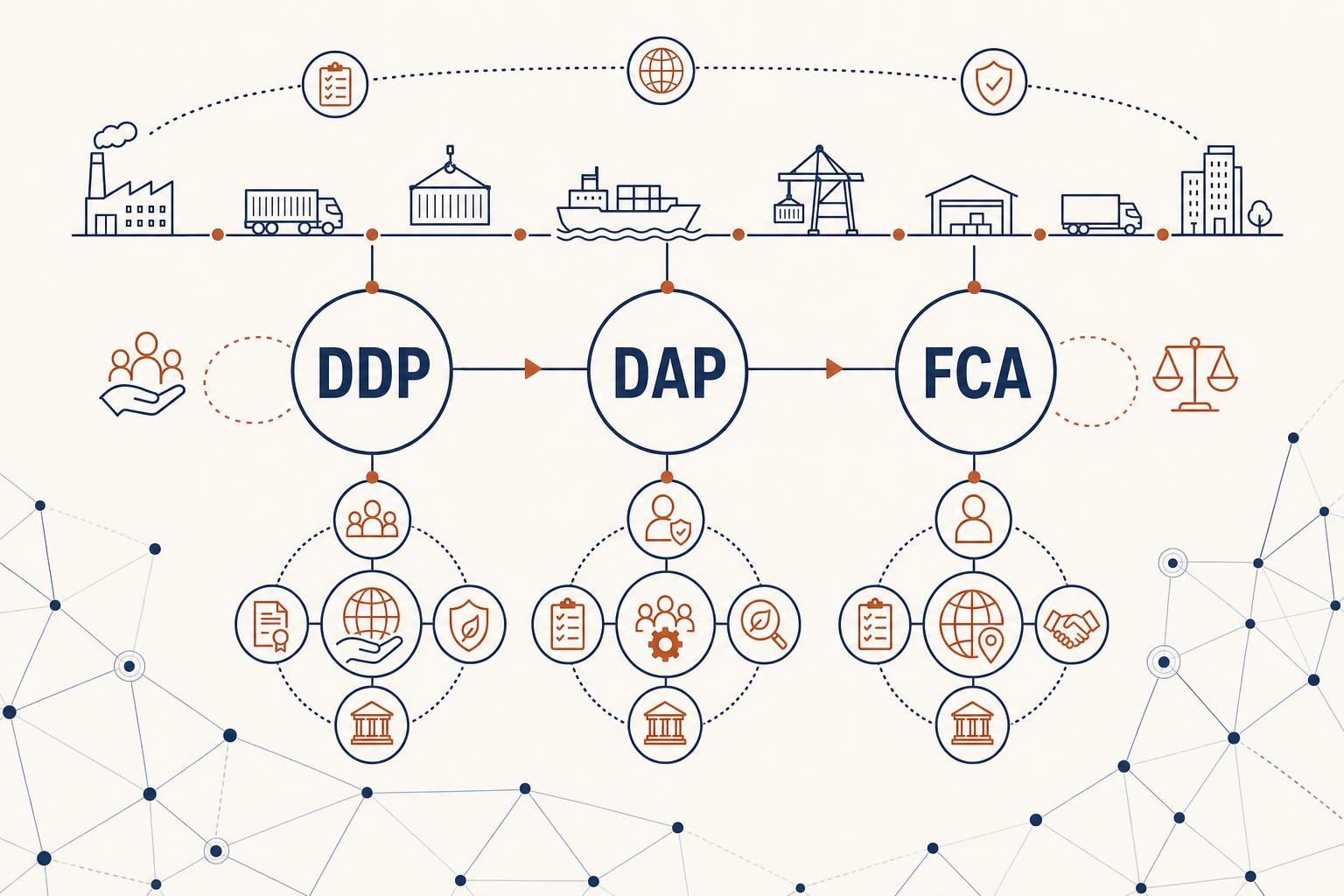
Three Letters, One Liability: How Your Incoterm Decides Who Pays CBAM
DDP, DAP, FCA - three letters in a contract determine who carries CBAM liability. A practical guide for procurement, trade compliance and legal teams on both sides of an EU import deal.